Be Kind, Rewind: The Case for Making Movie Night Hard Again
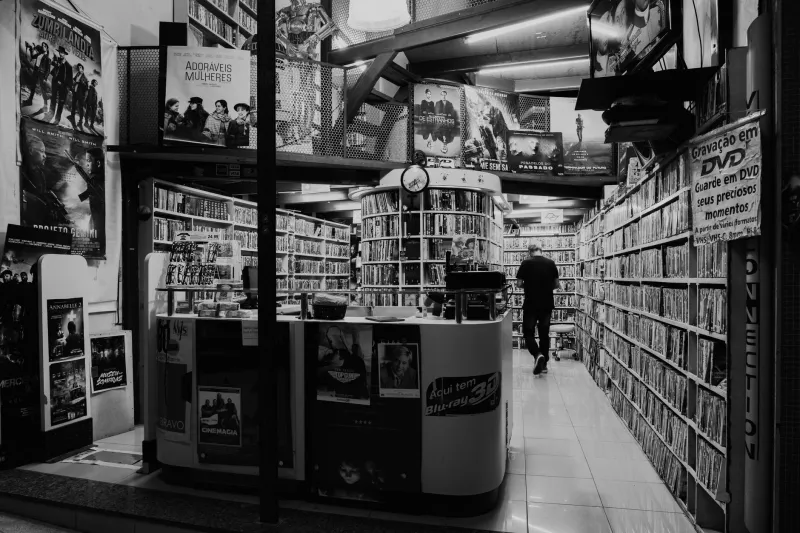
There's a generation of Americans who remember the specific panic of realizing the tape was still in the VCR at 11:47 p.m. on a Saturday. Not because the movie was scary. Because the late fee was.
If that sentence means anything to you, congratulations — you lived through the golden age of the video store, an era that ended not with a bang but with a slow, quiet migration to the couch. The last Blockbuster standing in Bend, Oregon is basically a tourist attraction now, a place people visit the way you'd visit a covered bridge or a soda fountain. It's charming precisely because it's extinct.
But here's the thing nobody wants to admit: we didn't just lose the store. We lost the night.
Friday Night Was a Production
Think about what getting a movie used to require. You didn't scroll. You traveled. Someone had to get in the car, drive to the store, and walk the aisles under fluorescent lights while a sibling whined about wanting the same movie you watched two weeks ago.
Every trip involved negotiation. Compromise. The occasional betrayal when someone grabbed the last copy of the new release while you were still deciding. And when you finally got home — popcorn situation handled, blanket deployed, the tape rewound (allegedly) — the movie itself was the dessert at the end of a whole meal of anticipation.
Psychologists have a name for part of this: "choice ownership." When you invest effort into a decision, you value the outcome more. The twenty minutes you spent browsing shelves made the movie yours in a way that a two-second tap on a thumbnail never will. Behavioral scientists have seen this effect everywhere from jam tastings to college course enrollment — effort changes how much we enjoy the result.
Streaming, for all its genuine miracles, deleted the effort. And with it, something essential about the experience evaporated.
The Tyranny of the Infinite Scroll
Here's the modern version of movie night: two people on a couch, forty minutes elapsed, three different services opened, and one of them saying "wait, what was that one with the guy?" before someone gives up and rewatchs a show they've both seen four times.
The problem isn't laziness. It's that infinite choice short-circuits the decision-making part of our brains. When the video store had eleven copies of everything and a wall of new releases, the options were bounded. You picked from what was there. Sometimes the pick was wrong — and honestly, a wrong pick at the video store was still a night. You watched the whole thing out of spite and talked about it for years.
Now a wrong pick costs nothing, so we abandon it in nine minutes and start over. Nothing sticks. Nothing becomes a memory.
Recreating the Ritual (Without Renting a DVD Player)
You can't get late fees back, and nobody's arguing you should. But you can borrow the structure of the old ritual. A few approaches that actually work:
Make the pick in advance. Decide on Wednesday what you're watching Friday. The anticipation gap is where half the old magic lived. You'll be surprised how much you look forward to a movie you chose three days ago versus one you settled on at 8:15 p.m.
Use a constraint. Pick a theme, an actor, a decade, a director. One person picks this week, the other picks next week, and no vetoes after the opening credits. Constraints are the modern equivalent of the empty shelf — they force a real decision.
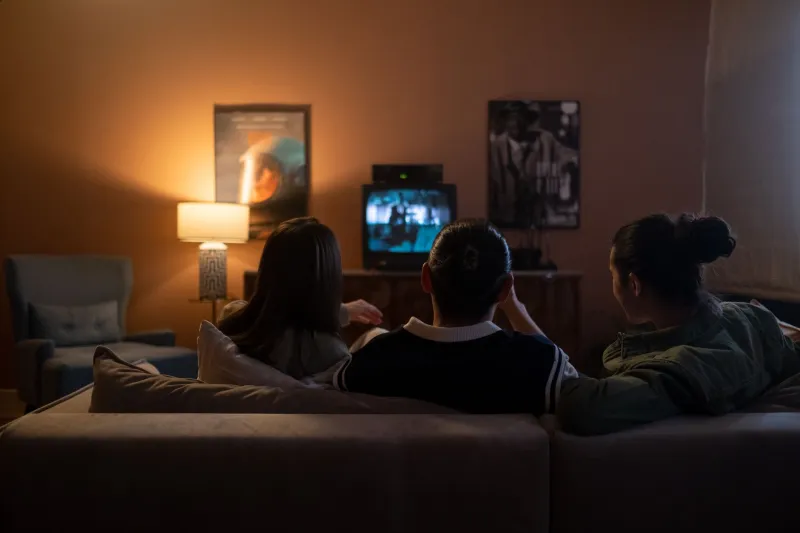
Make it an event, not a default. Popcorn that requires a pot, not a button. Phones in a basket by the door. Lights off. If someone walks in twenty minutes late, they don't get a recap. That's not rudeness — that's theater.
Let yourself pick badly. Give a movie a full hour before anyone's allowed to suggest bailing. Some of the best movie nights in history were built on two-star films watched with full commitment.
What We're Really Nostalgic For
The video store itself — the smell of carpet cleaner, the candy rack, the beeping checkout counter — was never the point. The point was that watching a movie used to be something you did, a small adventure with a beginning and an end, instead of something that happens at you while you also look at your phone.
The last Blockbuster survives because it represents a version of entertainment where the viewing was earned, chosen, and shared. Streaming will keep getting faster and the libraries will keep getting bigger. The fix isn't going backward. It's realizing that convenience was never the ingredient that made movie night special.
Effort was. And effort, thankfully, still works on demand.