Half a Season In, Gone: The Growing Trend of Abandoning Shows You Actually Loved

Photo: Photograph by Mike Peel (www.mikepeel.net)., CC BY-SA 4.0, via Wikimedia Commons
You were all in. You told your coworkers about it. You made your partner sit through the pilot. You had opinions about the characters like they were real people you vaguely knew. And then somewhere around episode five or six — you just... stopped.
Not because it got terrible. Not because something else came up. You stopped because finishing it started to feel like a chore, and somewhere between the plot twist you saw coming and the storyline that went nowhere, the magic faded out like a bad cell signal.
This is happening to a lot of people right now, and it's worth asking why.
It's Not Just You — It's a Pattern
Viewership data from the past few years paints a pretty telling picture. Completion rates for serialized drama have been quietly dropping, even for shows with strong debut numbers. A series might rack up massive first-week streams and then lose a significant chunk of its audience before the season wraps up. Networks and streamers track this obsessively, even if they don't love talking about it publicly.
The informal term floating around is "the great unwatching" — this mass, low-key exodus of viewers who don't hate a show, don't hate TV, but just can't seem to stay committed to any one thing long enough to see it through. It's different from canceling a subscription or rage-quitting after a bad episode. It's quieter than that. More like drifting.
And it's reshaping the industry whether the industry wants to admit it or not.
The Volume Problem Is Very Real
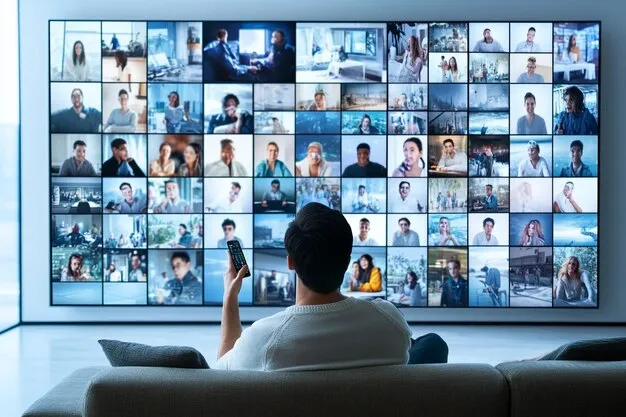
Let's be honest about the landscape for a second. There are hundreds of scripted shows available across major platforms at any given time. Not counting reality TV, not counting documentaries, not counting the stuff sitting in your "continue watching" queue that you've mentally already given up on. Just scripted, narrative-driven television — there is an enormous amount of it.
When every week brings a new prestige drama, a buzzy limited series, or a returning favorite, the cost of abandoning something mid-run feels a lot lower than it used to. Back when you had three networks and a DVR, walking away from a show meant you were probably done with it forever. Now? You can always come back. Except most people don't.
The abundance itself changes the emotional math. Commitment feels riskier when the opportunity cost is higher. Why push through a slow arc in episode six when there's a brand-new show everyone's talking about sitting right there?
Storytelling Structures That Work Against the Viewer
Here's something the industry doesn't love to hear: a lot of mid-season abandonment isn't about attention spans. It's about structure.
The streaming era trained writers and showrunners to think in terms of long-game payoffs. Mysteries that don't resolve until the finale. Character arcs that take three episodes to set up before they go anywhere interesting. Deliberate pacing that rewards patience but punishes casual watching.
For a while, audiences went along with it. The binge model made it easier — if the payoff was six episodes away, you could just watch all six in a weekend. But as release strategies have shifted back toward weekly drops, that buffer is gone. Now you're waiting seven days between episodes of a show that's deliberately withholding its most interesting material.
That's a lot to ask. And a growing number of viewers are deciding it's too much.
The Emotional Investment Equation
There's also a psychological layer here that doesn't get talked about enough. Watching a serialized show requires a specific kind of emotional labor. You have to track characters, remember backstory, hold onto unresolved threads, and stay curious enough to keep coming back. That's not passive entertainment — it's active engagement, and it draws on real mental and emotional resources.
When life gets busy, stressful, or just overwhelming, that labor can start to feel like too much. The show you loved in October might feel like homework by November. And the weird guilt that comes with abandoning it — because yes, people genuinely feel guilty about this — can make you avoid it entirely rather than just push through.
Some viewers describe a specific tipping point: the moment a show stops feeling like a reward and starts feeling like an obligation. Once you cross that line, the relationship is basically over, even if you never officially "quit."
What Networks Are Actually Doing About It
Some corners of the industry are paying attention. There's been a quiet but real shift toward tighter episode counts, faster-moving plots, and less patience for slow-burn setups that don't pay off quickly enough. Limited series have exploded partly because they sidestep the commitment problem entirely — if it's only six episodes, the barrier to starting (and finishing) is much lower.
Some showrunners are also rethinking how they structure season arcs, front-loading more satisfying moments rather than saving everything for the finale. The idea is to give viewers enough resolution along the way that they don't feel stranded if they miss the ending.
It's a meaningful adjustment, but it also reflects something a little sad about where things stand: the industry is essentially redesigning TV to accommodate an audience that's increasingly allergic to commitment.
Is This Actually a Problem?
Depends on who you ask. If you're a network executive watching completion rates drop, yes, it's a problem. If you're a writer who spent two years crafting a carefully layered season finale that half your audience will never see, it's probably demoralizing.
But from a viewer perspective? It's hard to call it a crisis. People are still watching a ton of television. They're still getting attached to characters, still recommending shows to friends, still having strong opinions about endings — even endings they didn't personally witness.
Maybe the more honest framing is that the old model of TV — where you watched every episode, in order, through to the finish — was always a little bit of an obligation dressed up as entertainment. And now that the obligation is optional, a lot of people are opting out.
That doesn't mean TV is dying. It means TV is changing, in real time, in response to how people actually live and what they actually have the bandwidth for.
The Takeaway
If you've got a half-finished season sitting in your queue right now, you're in very good company. The great unwatching isn't a personal failing — it's a pretty rational response to an entertainment environment that's asking a lot without always delivering enough in return.
And if the shows want you back? They're going to have to earn it, episode by episode, instead of banking on your loyalty to see it through.