Too Many Choices, Zero Chill: How Streaming Abundance Is Quietly Stressing You Out
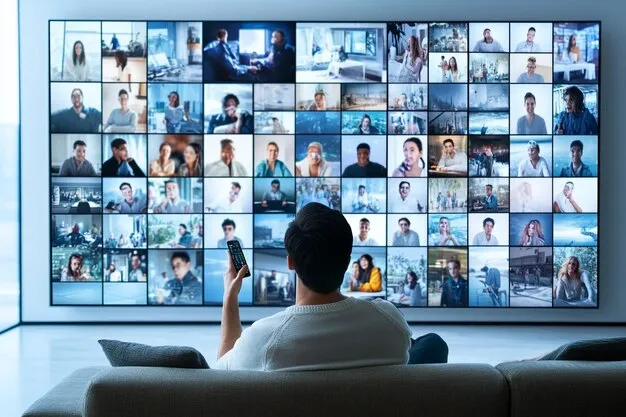
Photo: person overwhelmed looking at television remote with multiple streaming apps on screen, via img.freepik.com
Picture this: It's Friday night. You've earned it. You crack open your laptop, pull up your streaming apps, and spend the next 45 minutes scrolling through an endless catalog of movies and shows — only to close the laptop in mild defeat and go to bed. Or worse, you restart Schitt's Creek again.
Sound familiar? You're not alone, and you're definitely not broken. What you're experiencing has a name — decision paralysis — and the streaming industry has basically engineered the perfect conditions for it to thrive.
Welcome to the paradox nobody warned you about when they handed you a Netflix password.
More Isn't Always More
Back in the early days of cable, you had maybe 50 channels and a TV Guide. Choices were limited, but the decision was easy. You flipped until something caught your eye. The friction was low. The commitment felt light.
Now? Netflix alone has over 17,000 titles available in the US. Add Hulu, Max, Disney+, Peacock, Apple TV+, and Amazon Prime Video into the mix, and you're looking at a content library so massive it would take multiple human lifetimes to watch everything currently available. That sounds incredible on paper. In practice, it feels a lot like standing in a warehouse-sized grocery store trying to pick one brand of pasta sauce.
Psychologist Barry Schwartz literally wrote the book on this — The Paradox of Choice — and his central argument is deceptively simple: more options don't make us happier. They make us more anxious, more likely to second-guess ourselves, and ultimately less satisfied with whatever we do pick. Because the more options you have, the more you're aware of everything you're not choosing.
The Streaming Scroll Is a Trap
Here's where it gets a little uncomfortable. Streaming platforms are not neutral tools sitting there waiting for you to make a decision. They're actively designed to keep you in a state of browsing — because browsing keeps you on the platform. Every algorithm, every autoplay trailer, every "New Arrivals" row is engineered to simulate the feeling of discovery without necessarily delivering it.
The result? You end up in a scroll loop. You see something that looks interesting, then something else that looks slightly more interesting, then something that reminds you of something you already loved, and before you know it you've spent more time shopping for entertainment than actually consuming it. The effort of choosing starts to feel like work, and your brain — which is wired to conserve energy — eventually rebels.
And that's when the comfort rewatch kicks in.
Why We Keep Going Back to the Same Shows
There's a reason Friends, The Office, and Gilmore Girls are perennial streaming hits despite being decades old. It's not just nostalgia. Rewatching familiar content is genuinely lower-stakes for your brain. You already know you like it. You know what's going to happen. There's no risk of wasting 45 minutes on a pilot that goes nowhere, or sitting through two hours of a movie that doesn't land.
Psychologists call this "cognitive ease" — the mental comfort of processing something familiar. When the cost of making a bad choice feels high (which it does when you have 17,000 options), your brain defaults to the safe bet. The rewatch isn't a failure of imagination. It's a rational response to an overwhelming environment.
But here's the catch: over time, that habit can quietly flatten your entertainment experience. You stop being surprised. You stop discovering things that genuinely move you or make you think. You end up in a loop that feels comfortable but leaves you a little... empty.
Breaking the Pattern Without Making It Another Chore
The good news is you don't have to overhaul your entire relationship with streaming to feel better about it. Small, intentional shifts can make a real difference.
Give yourself a time limit on browsing. Seriously. Set a five-minute timer before you start scrolling. If you haven't landed on something by the time it goes off, pick the most interesting thing you saw and commit. The pressure of an unlimited browsing window is part of what makes the decision feel so heavy.
Use external recommendations instead of the algorithm. Ask a friend what they've been watching. Check a publication's "best of" list. Look at what's trending in actual human conversations on Reddit or social media. The algorithm knows your history — it doesn't always know what you need right now.
Embrace the single-platform night. Instead of hopping between six apps, pick one for the evening and only choose from that catalog. Artificial constraints are genuinely liberating when you're dealing with choice overload.
Let go of the "perfect pick" myth. This one's big. A lot of decision paralysis comes from the belief that there's an objectively correct show for this exact moment, and you just have to find it. There isn't. Most things are worth watching if you actually give them 20 minutes. Lower the bar for starting something new, and you'll be surprised how often it pays off.
Schedule your rewatches intentionally. There's nothing wrong with comfort viewing — but do it on purpose, not by default. If you decide on a Thursday that Friday night is a Parks and Rec rewatch night, that's a deliberate choice that feels good. Drifting into it because you couldn't decide anything else feels different.
The Real Cost of Infinite Options
Here's the thing nobody in the streaming business wants you to think about too hard: the abundance of content was never really designed with your enjoyment in mind. It was designed to justify subscription costs, win market share, and keep you from canceling. The sheer volume of content is a selling point in a competitive market, not a viewer experience feature.
That doesn't mean streaming is bad. There's genuinely incredible stuff out there — more high-quality television and film than any previous generation has had access to. But enjoying it requires a little intentionality that the platforms aren't going to provide for you.
The paradox of choice is real, and it's quietly making Friday nights more stressful than they need to be. The fix isn't finding a better algorithm or subscribing to one more service. It's deciding — consciously, deliberately — to watch something instead of endlessly shopping for the perfect thing to watch.
Close a tab. Pick something. Press play.
Your brain will thank you.