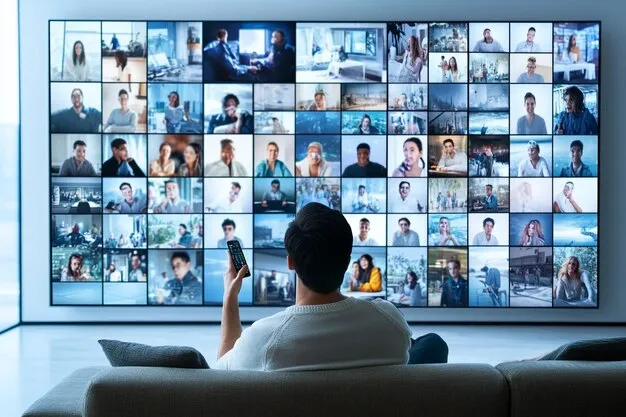
Awards Bait or Just... Bait? Why the Most Praised Shows of the Year Feel Like Required Reading
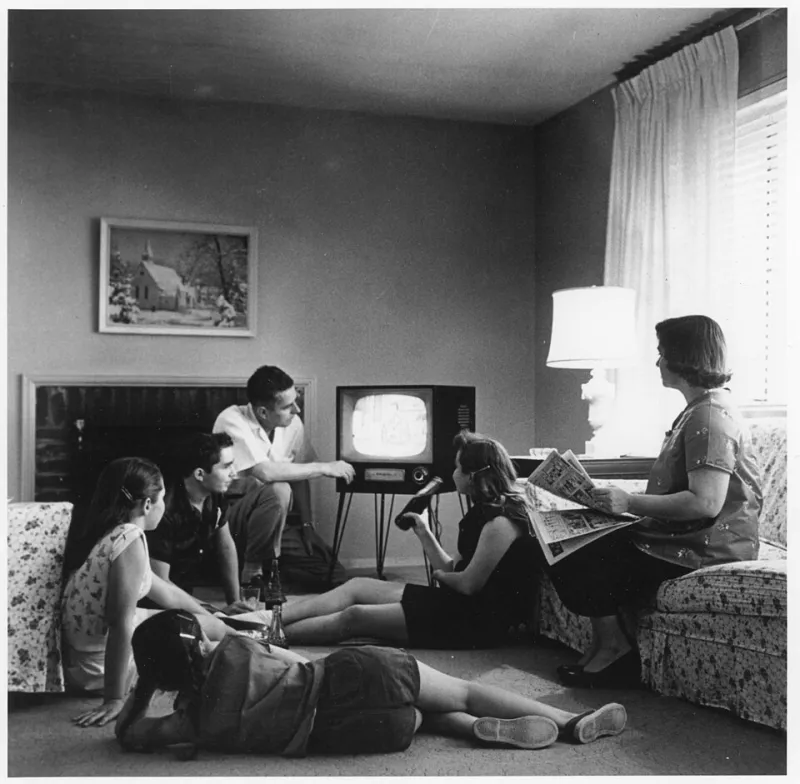
Photo: Evert F. Baumgardner, Public domain, via Wikimedia Commons
You've probably been there. A show lands on every top-ten list. Critics are losing their minds over it. Your coworker won't stop referencing it at lunch. So you sit down, hit play, and then... you kind of just wait for it to be over.
Not because it's bad, exactly. The cinematography is gorgeous. The performances are technically flawless. The writing is dense and deliberate and clearly the product of a lot of very smart people working very hard. And yet somewhere around episode three, you realize you've been checking your phone.
This is the prestige TV paradox of right now — and it's becoming impossible to ignore.
The Gap Between 'Great' and 'Good to Watch'
There used to be a time when critical praise and audience enthusiasm pointed in roughly the same direction. Breaking Bad was a critical phenomenon AND people were genuinely obsessed with it. Same with early Game of Thrones, The Wire, Mad Men. These were shows that felt urgent and alive, where you'd finish an episode and immediately want to talk about it with someone — anyone.
What's happening lately feels different. The shows winning the most attention from awards bodies and prestige publications are increasingly the ones that feel like an assignment. You watch them because you feel like you should, not because you can't help yourself.
Look at the viewing numbers on some of last year's most critically acclaimed series. A handful of them peaked in the first week and then dropped off sharply — not because they got worse, but because audiences finished their cultural homework and moved on. Meanwhile, shows that critics treated as guilty pleasures were quietly racking up massive, sustained viewership.
Something has quietly broken in the feedback loop between critics and regular viewers.
What Critics Are Measuring (And What You Actually Want)
Here's the honest thing: critics and general audiences are not watching TV the same way, and they haven't been for a while.
A TV critic watches dozens of shows a season. They're trained to evaluate craft — pacing, thematic coherence, performance, visual language. They're rewarding ambition and originality, which makes sense. Those are real and valuable things.
But most people watching TV on a Tuesday night after work are not running a craft analysis. They want to feel something. They want to be pulled forward. They want to care about what happens next in a way that makes them forget they're tired.
The shows getting the most critical love right now tend to be slow, deliberately paced, thematically heavy, and emotionally demanding. Which — again — isn't inherently a problem. But when every prestige show starts hitting the same notes, you get a kind of aesthetic monotony that critics mistake for seriousness and audiences experience as a slog.
There's a version of prestige TV that earns its weight. And then there's a version that's just performing depth without actually delivering it.
The 'Important Show' Trap
One of the stranger trends in recent TV is what you might call the Important Show Trap. These are series built around a serious subject — addiction, systemic racism, political corruption, grief, trauma — where the subject matter does a lot of the critical heavy lifting regardless of whether the actual storytelling is compelling.
If a show is about something weighty, critics often extend it more patience than the execution might deserve. Audiences, who don't have that same obligation, tend to bounce off more quickly.
This isn't cynical. The topics matter. But importance of subject and quality of execution are two separate things, and right now they're getting conflated constantly — both in how shows are marketed and how they're reviewed.
The result is a prestige TV landscape where a show can win every major award and still feel, watching it, like eating nutritious food you don't actually enjoy. You're glad it exists, probably. You're just not going back for seconds.
Meanwhile, the 'Guilty Pleasures' Are Just... Pleasures
Here's where it gets interesting. While critics were busy debating which somber limited series best captured the American condition, audiences were obsessing over shows that critics either ignored or lightly dismissed.
Reality competitions. Genre shows. Glossy dramas with ridiculous plots and deeply watchable characters. These aren't shows that win awards or show up on year-end lists from serious publications. But they're the ones people are actually talking about, rewatching, making memes about, building parasocial relationships with.
The word 'guilty' in 'guilty pleasure' is doing a lot of work it probably shouldn't be doing. If millions of people are genuinely entertained by something, that's not a lesser form of entertainment. That's just entertainment working.
The prestige framework has always had a bit of a class problem — the idea that slow, literary, emotionally difficult content is inherently more valuable than fast, fun, emotionally satisfying content. That assumption is worth interrogating, especially when the 'lower' content is consistently outperforming the 'higher' content in every metric that reflects actual human enjoyment.
Is Peak TV Eating Itself?
There's a real argument that the sheer volume of prestige content has diluted what prestige even means. When every streaming platform is producing their version of the Serious Adult Drama, the category stops feeling special. It just feels like a genre with a particularly high opinion of itself.
The shows that break through the noise right now tend to be the ones with genuine personality — the ones that feel like they were made by people who actually wanted to make that specific show, rather than people who wanted to make an awards contender.
That energy is detectable. Viewers pick up on it, even if they couldn't articulate it. There's a difference between a show that's alive and a show that's technically correct.
What Would Actually Fix This
Nobody's saying prestige TV needs to dumb itself down. The answer isn't to make everything a fast-food experience.
But there's a version of ambitious, serious television that's also genuinely gripping — that trusts its audience to handle complexity while also giving them something to hold onto emotionally. The shows that have actually changed TV culture did both things at once. They were smart and compulsive. Challenging and fun.
The current critical apparatus might need to recalibrate toward rewarding that combination, rather than treating watchability as somehow suspect. And showrunners might need to remember that asking an audience to work hard is fine — but you have to give them a reason to show up in the first place.
Because here's the thing: entertainment that nobody actually enjoys isn't really entertainment. It's a very expensive way to feel cultured for about forty-five minutes before you switch over to something you actually want to watch.
And there's no award for that.